Viatris (VTRS) Has Fallen in 6 of 6 Midterm Windows as a New 40-Day Stretch Opens
Viatris is heading into a 40-day midterm-election seasonal stretch that has rewarded shorts every time in the past, just as the stock works through legal and operational overhangs.

Key takeaways
- A 40-day seasonal window for Viatris tied to midterm election years begins on Mar 30, 2026.
- Across the last 6 midterm cycles, Viatris has moved lower in this window every time, favoring short exposure.
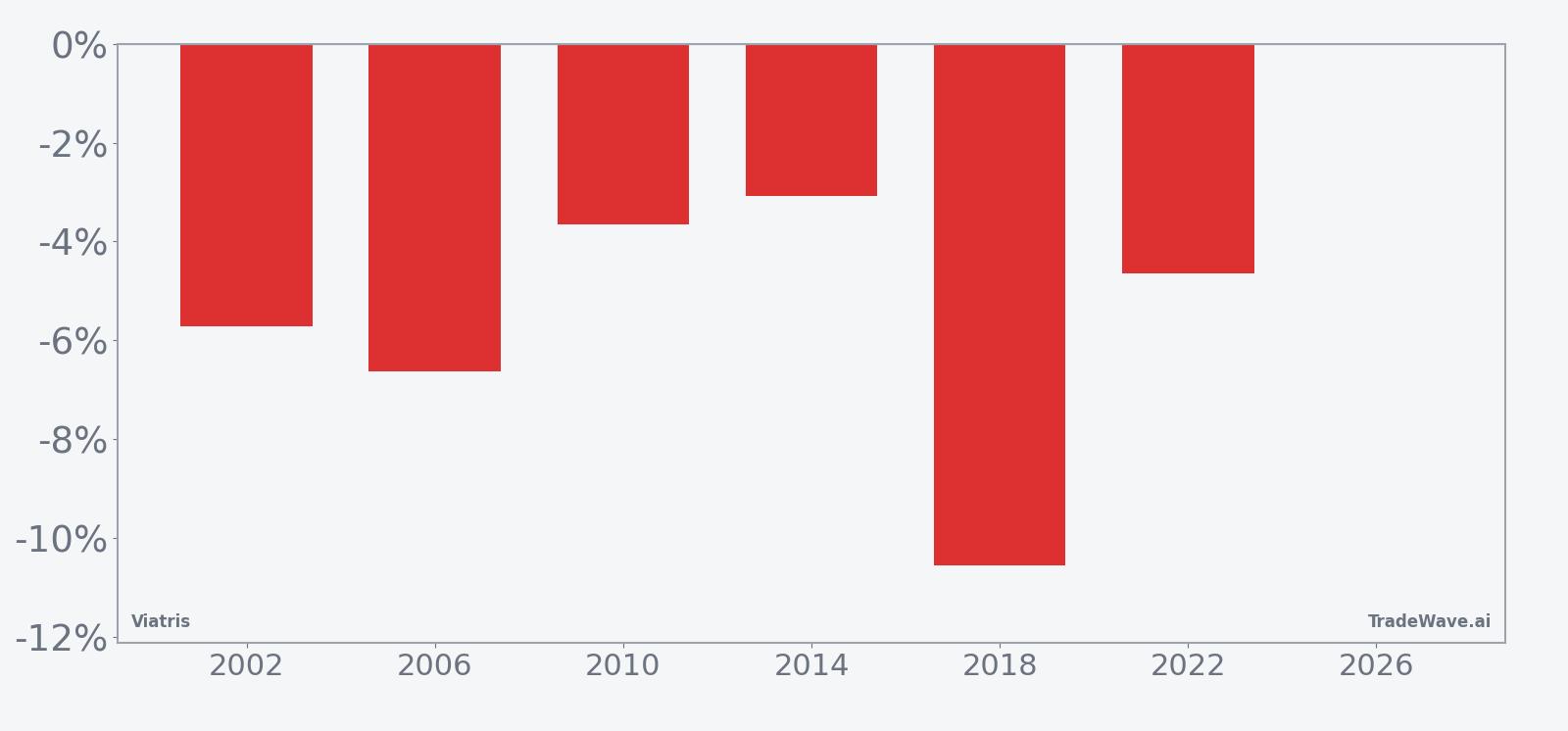
- The pattern shows 100% profitable outcomes for the short side, with 6 winners and 0 losers and an average gain of 5.71%.
- Intraperiod swings have been meaningful, with adverse moves against the short often reaching double digits before the trade finished in the green.
- The setup arrives as Viatris continues to digest past earnings disappointment, regulatory issues and opioid settlement costs.
According to historical data from TradeWave.ai, this specific midterm-year stretch has behaved very differently from an average month on the Viatris calendar, and the next iteration is now less than four weeks away.
Seasonal window
Viatris has delivered profitable short-side trades in all 6 of the last midterm election years during this 40-day window, averaging a 5.71% decline from entry to exit. That upcoming window begins on Mar 30 and runs into early May, landing in the early part of the midterm election year when policy uncertainty and drug-pricing rhetoric often pick up. For a stock that has already been under pressure from earnings misses, regulatory scrutiny and litigation, another historically weak stretch on the calendar is a risk traders cannot ignore.[1]
The presidential election cycle matters here because this pattern only looks at the last six midterm election years, a phase that often brings tougher talk on drug prices, reimbursement and healthcare spending. Grouping by that phase filters out noise from other parts of the cycle and focuses on how Viatris has behaved when Washington is in mid-course and policy risk tends to be highest for pharmaceuticals.
Across those six midterm years, the trade direction is explicitly short. Every single iteration produced a negative net return for the stock over the 40-day span, which is a positive outcome for a short position. The average winner gained 5.71% for shorts, while the median outcome was close at 5.18%, suggesting the pattern has been relatively consistent rather than driven by a single outlier year.
The per-year table shows the weakest year for the stock in this window was 2018, when Viatris fell 10.55% from entry to exit, again a strong result for shorts. The mildest decline came in 2014, with a 3.07% drop over the window. Even in that softer year, the trade still finished in the green for bears, which is why the win-loss record sits at 6 winners and 0 losers.
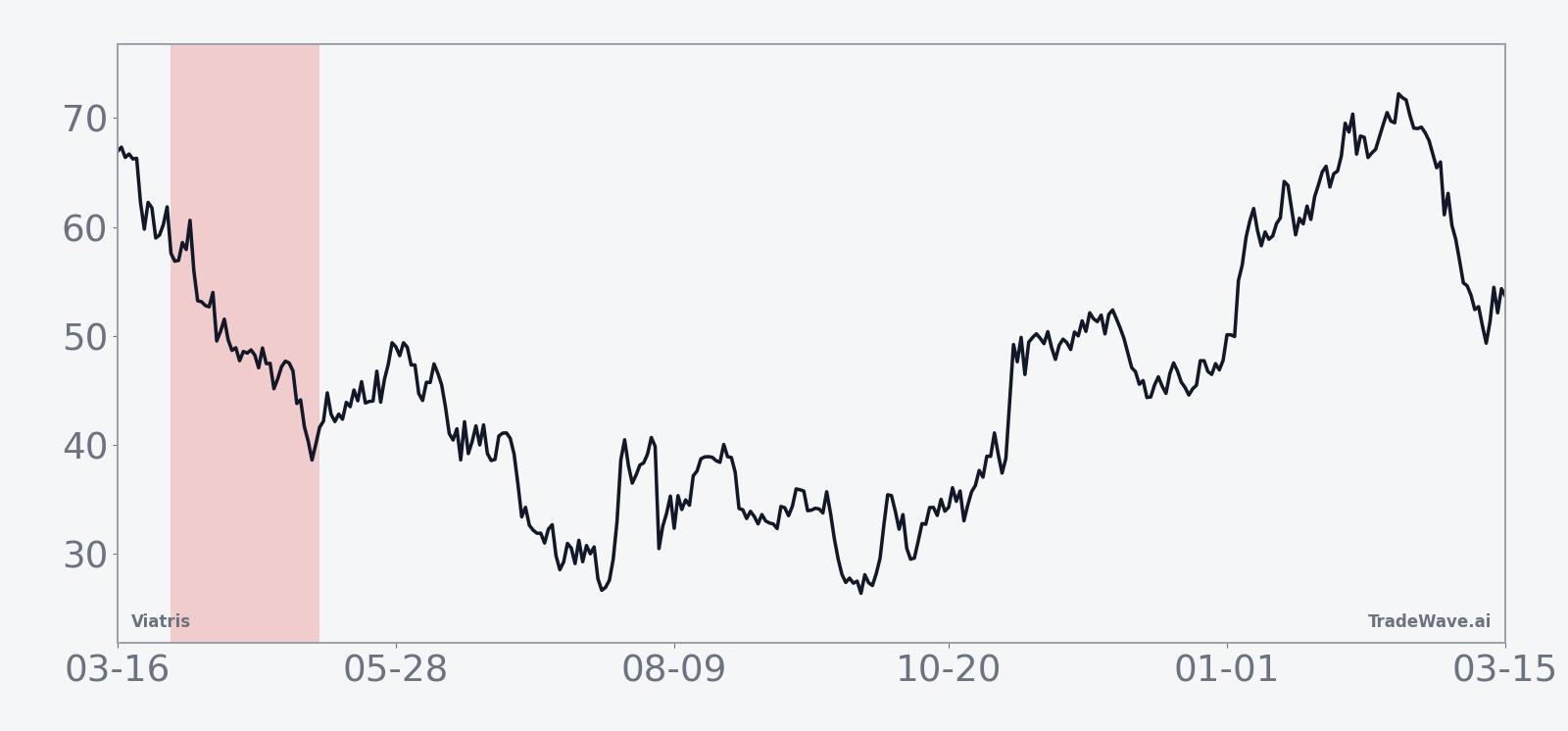
The historical seasonal trend chart suggests that weakness has not been a one-day event. In prior midterm years, Viatris has tended to drift lower through the bulk of the 40-day span, with the cumulative decline building rather than snapping all at once. That kind of grind can be hard for longs to sit through, especially when it coincides with headline risk around regulation or litigation.
A second view that stacks net returns with best and worst intraperiod swings shows how much room the stock has historically given both shorts and longs inside the window.
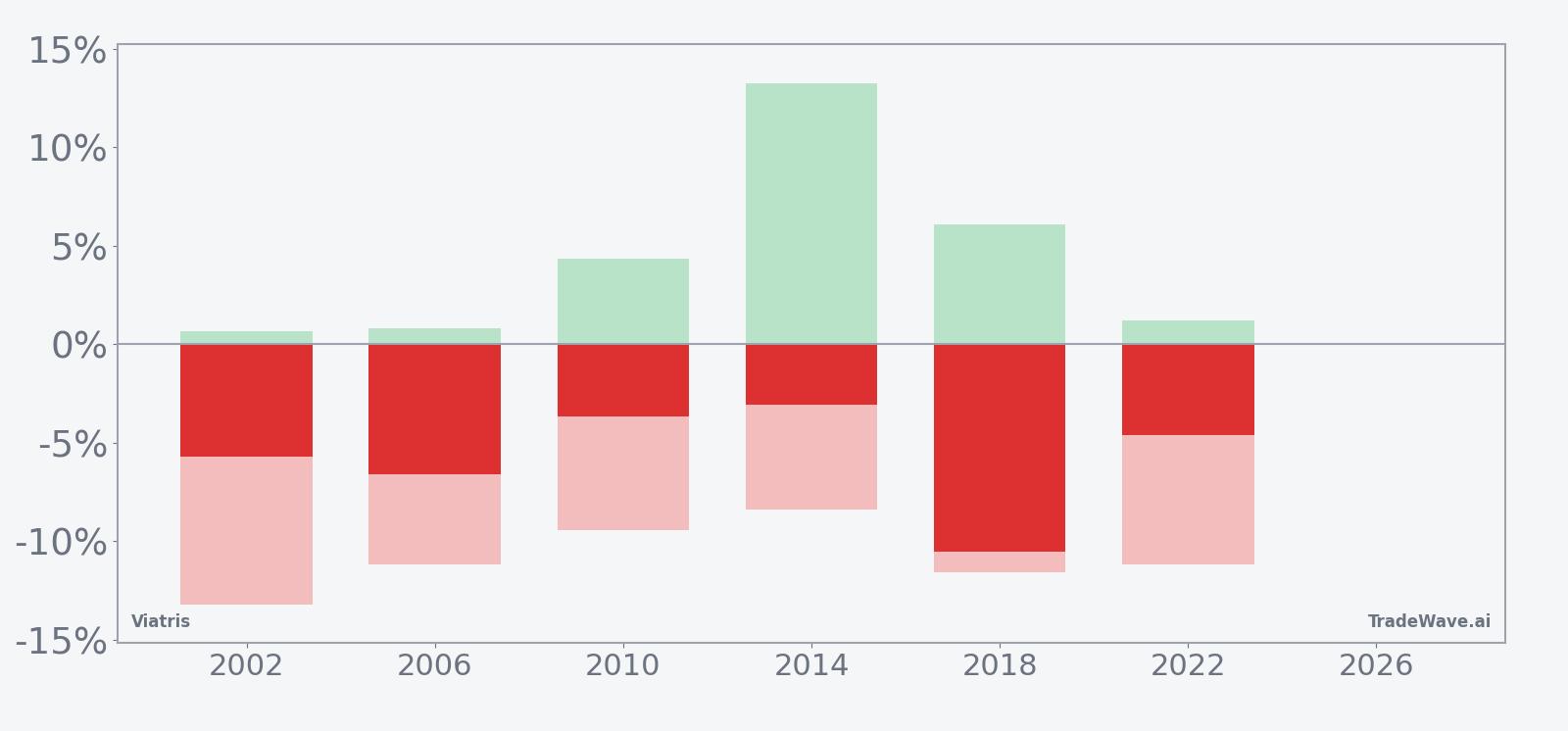
Those bars show that while the final net move has reliably favored shorts, the path has not been one-way. In several years, the worst move against the short position, or maximum adverse excursion, reached roughly 11% to 13% before the stock rolled over again. At the same time, the best move in favor of the short, or maximum favorable excursion, has often extended beyond the final close, which means traders who timed exits well could have captured more than the average 5.71% decline.
History does not guarantee future results, and even in a window with a perfect track record for shorts, adverse moves within the period have been large enough to challenge risk management.
Price and near-term drivers
Viatris comes into this seasonal setup after a bruising stretch that included an earnings miss, lower guidance and a sharp one-day drop to $9.53 per share in late February 2025, when the stock fell 15.21% after reporting Q4 and full-year 2024 results below consensus.[1] That same period brought an FDA warning letter and import alert for an India manufacturing facility, with management outlining remediation efforts expected to take several months.[1] In April 2025, the company agreed to pay up to $335 million over nine years to resolve opioid-related claims, adding another layer of legal and financial overhang.[4]
Legal risk has not gone away. In April 2025, The Gross Law Firm reminded investors of a pending class action lawsuit with a lead plaintiff deadline of Jun 3, 2025, focused on alleged misstatements and omissions by Viatris.[3] In May and June 2025, Morningstar carried multiple investor alerts from Faruqi & Faruqi and The Gross Law Firm flagging securities fraud investigations and opportunities for shareholders with large losses to seek lead-plaintiff status.[1][2][5] Those actions speak to a shareholder base that has already absorbed significant volatility and is still working through the fallout.
All of this sits against a broader backdrop where drugmakers often find themselves in the crosshairs during midterm election years, as lawmakers revisit pricing, reimbursement and opioid accountability. For a mid-cap name like Viatris, which lacks the balance-sheet heft of the largest pharma players, that combination of policy noise, operational clean-up and litigation can amplify swings that might otherwise be manageable.
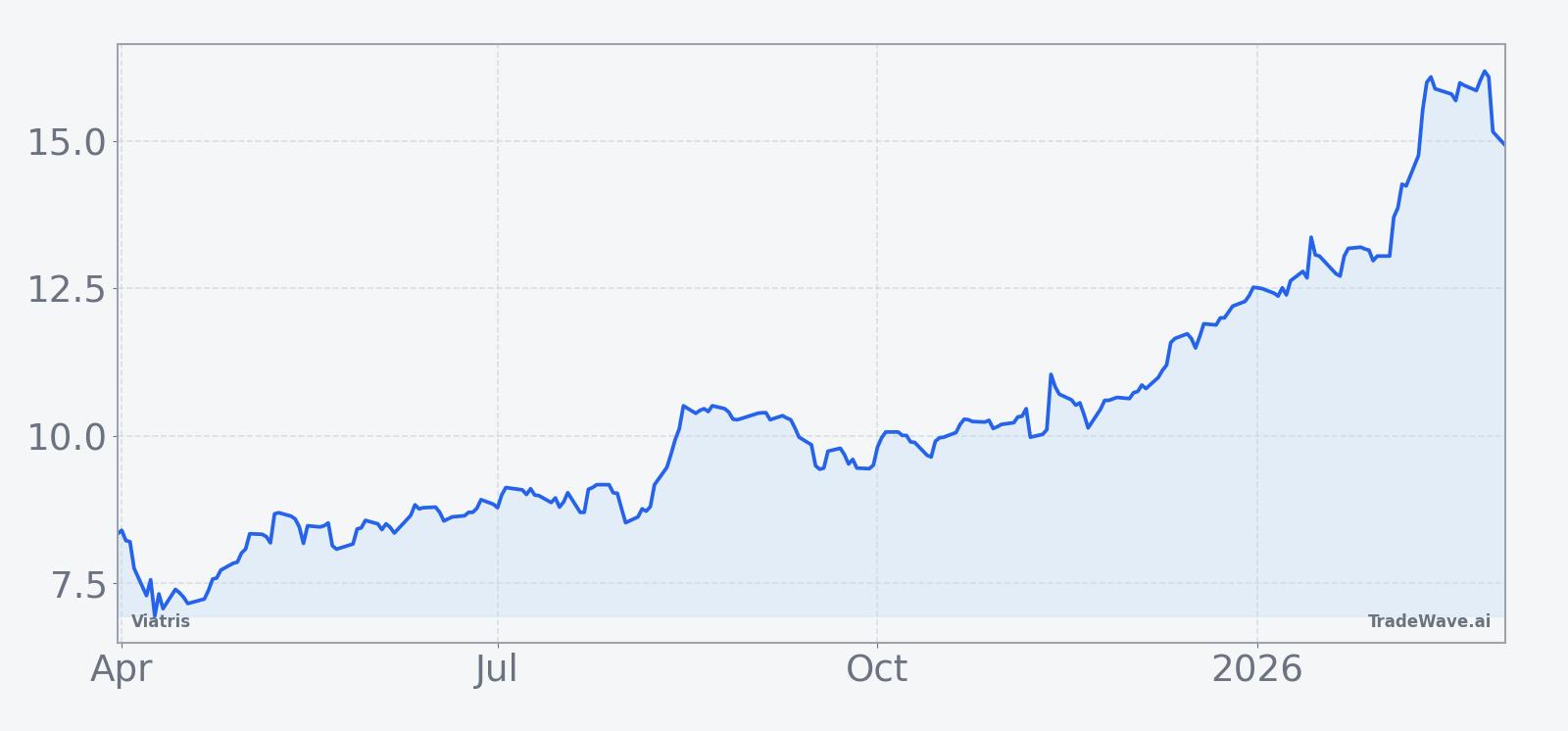
The chart below situates the latest moves in Viatris against its recent 12-month trading range.
What to watch as the window opens
The next key date on the calendar is Mar 30, when the 40-day midterm-year window officially begins. Traders will be watching how Viatris trades into that date: a strong pre-window rally would give shorts more room to work with, while a slide into the start could compress the opportunity even if the historical pattern repeats.
Policy risk is the second pillar. Any fresh headlines around U.S. drug pricing, reimbursement changes or opioid-related enforcement could interact with the seasonal tendency, either accelerating downside or, if unexpectedly benign, blunting it. The same goes for updates on the India facility remediation, where faster-than-expected progress could support the stock even in a historically weak stretch.[1]
Finally, behavior inside the window will matter as much as the end result. In prior cycles, shorts have had to sit through intraperiod rallies of 10% or more before the trade worked again, so the depth and timing of any early bounce will be a key tell. If Viatris sells off quickly and then stabilizes, that would mark a departure from the usual grind-lower profile. If instead the stock chops higher before rolling over, it would look more like the historical script.
For investors and traders who have lived through the last year of Viatris headlines, the message is simple: this is a part of the calendar that has not been kind to longs in midterm election years. The pattern does not dictate what happens next, but it sets a backdrop that makes every earnings update, regulatory filing and legal headline between late March and early May matter that much more.
Sources
- Morningstar: INVESTOR ALERT: Faruqi & Faruqi, LLP Investigates Claims on Behalf of Investors of Viatris - VTRS (May 11, 2025)
- Morningstar: Viatris Deadline: VTRS Investors with Losses in Excess of $100K Have Opportunity to Lead Viatris Inc. Securities Fraud Lawsuit (Jun 1, 2025)
- Morningstar: The Gross Law Firm Reminds Viatris Inc. Investors of the Pending Class Action Lawsuit with a Lead Plaintiff Deadline of June 3, 2025 - VTRS (Apr 10, 2025)
- Reuters: Viatris to pay up to $335 million to resolve opioid-related claims (Apr 7, 2025)
- Morningstar: The Gross Law Firm Reminds Shareholders of a Lead Plaintiff Deadline of June 3, 2025 in Viatris Inc. Lawsuit - VTRS (May 8, 2025)